She Carried It First: How to Make a Handed-Down Bag Feel Like It Was Always Yours
There's a specific kind of pause that happens when someone hands you a bag that belonged to another woman in your family. You hold it. You smell the leather. You notice the worn corner she probably bumped against a hundred door frames. And then comes the question you don't quite say out loud: Am I actually going to use this, or am I just going to feel guilty if I don't?
That tension — between love and obligation, between honoring someone and actually living your life — is something a lot of us quietly navigate. Inherited bags are complicated in a way that inherited jewelry rarely is. A ring sits on your finger. A bag has to function. It has to hold your stuff, match your life, and go where you go. That's a higher bar.
But here's the thing: when it works, it really works. A vintage leather bag with actual history behind it is one of the most effortlessly cool things you can carry. And the sustainability angle isn't nothing — the most eco-conscious bag you'll ever own is one that already exists.
So how do you get from "this was Mom's" to "this is mine"? It takes a little honesty, a little practical thinking, and maybe a trip to a good leather repair shop.
Start With the Honest Audit
Before you commit to carrying an inherited bag, give it a real look — not a sentimental one. Set it on a table in good light and ask the same questions you'd ask about any bag you were considering buying.
Does the size work for your actual daily life? A structured 1970s top-handle bag is beautiful, but if you're someone who needs to carry a laptop, a water bottle, and a pair of sneakers to the gym, that bag is going to frustrate you every single day. Frustration breeds resentment. Resentment means the bag ends up back on a shelf.
What's the hardware situation? Brass that's darkened with age can be incredibly chic. But if the zipper is broken or a clasp is bent in a way that makes opening it a two-handed operation, that's a fixable problem — not a reason to abandon the bag, but something to address before it becomes your everyday carry.
And the lining? Check it. Old bags often have linings that have cracked, peeled, or torn. A compromised lining isn't just annoying — it's how you lose your AirPods in a crack you didn't know existed.
Get It Professionally Assessed
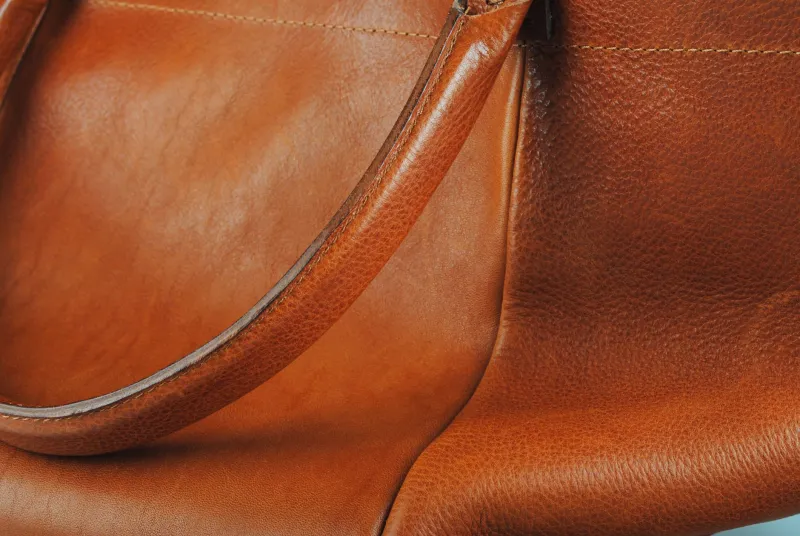
A good leather restoration shop is worth its weight in, well, good leather. Before you decide whether a bag fits your life, find out what it would cost to bring it back to functional condition. Many cities have cobblers or leather repair specialists who work on handbags — and what they can do with a dried-out, scuffed vintage piece is genuinely impressive.
Conditioning cracked leather, replacing a broken strap, re-dyeing a faded edge — these repairs often cost far less than people expect, and they can transform a bag that felt like a museum piece into something you'd actually reach for on a Tuesday morning.
Think of it as the bag's version of a fresh start. You're not erasing history. You're just making it livable.
Stop Trying to Wear It the Way She Did
This is the part where a lot of people get stuck. There's an unconscious impulse to carry an inherited bag the same way its original owner did — with the same outfits, the same occasions, the same formality. And that's a fast track to the bag feeling like a costume rather than a wardrobe staple.
Your mother's structured leather satchel doesn't have to be worn with blazers and dress pants just because that's how she wore it. Style it with straight-leg jeans and a white tee. Carry it to a farmers market. Pair it with a sundress. Let it exist in your actual life, not a recreation of hers.
Vintage pieces have this remarkable quality: they look intentional in modern contexts precisely because they're not from a current collection. That contrast — old bag, fresh outfit — is a whole aesthetic. You don't have to manufacture it. You just have to stop fighting it.
Decide What the Bag Is Actually For
Not every inherited bag has to become your daily driver. That's a perfectly valid outcome to land on, and it's better than forcing a bag into a role it can't fill.
Maybe your grandmother's beaded evening clutch lives in your closet for the three or four occasions a year when it's genuinely perfect. Maybe your mom's oversized tote becomes your farmers market bag or your weekend travel carry-on. Maybe a small crossbody gets repurposed as a going-out bag when you want to carry almost nothing.
Finding the right use case for an inherited piece is a form of respect. You're not minimizing it — you're being honest about where it fits. A bag that gets used occasionally but joyfully beats a bag that sits in a dust bag out of guilt every single time.
Make One Small Thing Yours
If you want to signal — even just to yourself — that this bag has transitioned from hers to yours, a small personalization can go a long way. A new strap in a color she never would have chosen. A bag charm that reflects something specific to your life. Even just switching out the interior pouch or wallet you keep inside it.
These aren't acts of erasure. They're acts of ownership. The bag's history doesn't disappear because you added a braided keyring to the handle. It just gains a new chapter.
The Real Case for Carrying It
At the end of the day, an inherited bag represents something no amount of shopping can replicate: a physical object that connects you to someone else's life. The scuffs are her scuffs. The patina is hers. The way the leather has softened in certain spots is a record of how she held it, where she went, what she carried.
That's not nothing. In a world of fast fashion and trend cycles that move faster than most of us can track, a bag with actual provenance is quietly radical. It says: this wasn't bought to impress anyone. It was kept because it mattered.
Carry it because it works for your life. Style it like it's yours — because it is now. And if someone asks about it, tell them where it came from. That story is part of what makes it worth carrying.