Why Saying Goodbye to a Beloved Bag Hurts More Than You Think
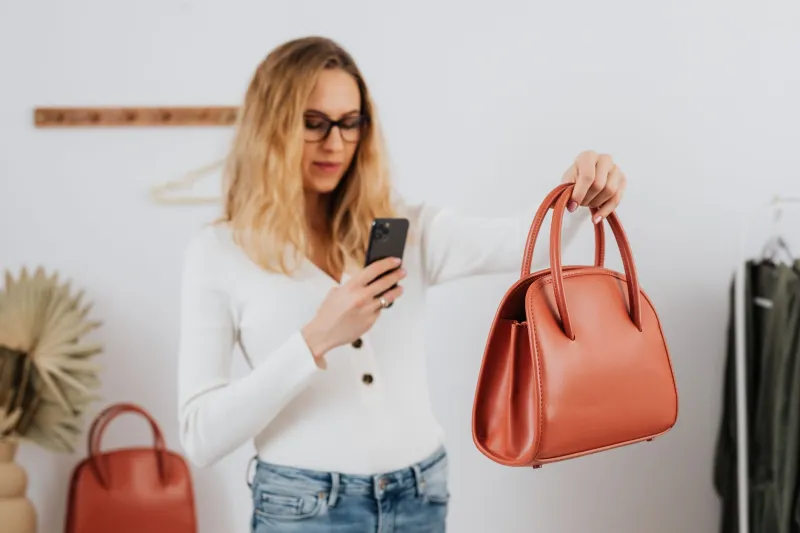
It's sitting in the corner of your closet right now. The strap is fraying. The lining is a disaster. You haven't used it in two years. And yet — every single time you consider getting rid of it, something stops you.
That's not sentimentality run amok. That's attachment, and it's more psychologically layered than most of us give it credit for.
Bags, it turns out, are not just bags. They're witnesses.
The Object That Holds the Story
Psychologists have long studied what's known as the "endowment effect" — our tendency to place higher value on objects simply because we own them. But with bags, something even deeper is often at play. We don't just own them. We carry them. Literally through our lives.
That crossbody you bought the week you got your first real job. The tote that went with you to every doctor's appointment during a scary health scare. The clutch you gripped at your best friend's wedding. These aren't accessories in any casual sense. They're physical artifacts of lived experience.
"Objects that travel with us through high-emotion moments become encoded with memory in a way that stationary objects simply don't," explains the broader field of material culture psychology. The bag was there. It absorbed the moment. And now, on some unconscious level, letting it go feels like erasing a piece of evidence that the moment even happened.
The Breakup Analogy Is More Accurate Than It Sounds
Here's the thing about breaking up with a bag: the emotional architecture is surprisingly similar to ending a relationship. There's nostalgia. There's guilt. There's the nagging sense that you're betraying something that once served you well.
Fashion therapists — yes, that's a real and growing field — often describe this dynamic with clients who struggle to edit their wardrobes. The item itself becomes a stand-in for the version of yourself that carried it. Getting rid of the bag can feel, irrationally but genuinely, like abandoning that former self.
And that's where the emotional work gets interesting.
Because the question isn't really should I keep this bag? It's am I afraid of who I was, or am I afraid of who I'm becoming?
Why Some Bags Hit Different
Not every bag earns this kind of emotional real estate, and it's worth understanding why certain ones do.
Generally, the attachment runs deepest when three things overlap:
1. The bag was present during a transition. Starting a new job, moving to a new city, navigating a breakup — moments of identity shift tend to anchor us to the objects nearby. The bag becomes a symbol of surviving that passage.
2. You chose it intentionally. A bag you saved up for, researched, and selected with care carries more psychological weight than one you grabbed impulsively. The deliberateness of the choice becomes part of the meaning.
3. It carried your daily life. The bag that held your keys, your wallet, your snacks, your phone — the mundane stuff — for years becomes almost like a companion. There's intimacy in that kind of proximity.
When all three factors converge, you're not looking at a worn leather tote. You're looking at a chapter of your life that's been compressed into an object.
The Guilt Is Part of the Grief
Something worth naming: a lot of people feel guilty about their attachment to bags. Like it's frivolous or materialistic to mourn a purse.
But the grief isn't about the object itself — it's about what the object represents. The relationship you had with yourself while carrying it. The person you were. The life you were living. That's not frivolous. That's human.
Permitting yourself to feel the loss, rather than dismissing it, is actually the first step toward moving forward without dragging the weight of unprocessed sentiment into every future purchase.
A Framework for Retiring a Bag with Intention
So how do you actually do it — let go of a bag that meant something — without just stuffing it in a donation bin and feeling vaguely terrible for a week?
Here's a loose framework that fashion therapists and professional organizers have found genuinely useful:
Acknowledge what it carried. Before you decide what to do with the bag, take a few minutes to actually name what it meant. Where did it go with you? What was happening in your life when you used it most? This isn't wallowing — it's completing the loop.
Separate the memory from the object. The experiences belong to you, not the bag. Remind yourself that donating the tote doesn't delete the promotion, the move, the relationship, or whatever else it witnessed. You carry those things. The bag was just along for the ride.
Give it a good exit. If a bag is truly past its functional prime, see if it can be repaired, upcycled, or given to someone who'll actually use it. A bag that ends up living out its days in a meaningful way is easier to release than one that disappears into a landfill.
Document it if that helps. Some people find it useful to photograph a beloved bag before letting it go — a small ritual that acknowledges the relationship before closing it. It sounds a little extra, but it works.
Ask what you're really ready for. Sometimes the reason we can't let go of an old bag is that we haven't yet fully stepped into the next version of ourselves. The bag becomes a placeholder. If that's the case, the work isn't about the bag at all — it's about giving yourself permission to move forward.
Carrying Less Means Carrying Better
At Beu Bag, we talk a lot about the idea of carrying less and meaning more. That's not just about minimizing the physical weight on your shoulder — though your chiropractor will thank you. It's about being intentional with what you bring into your life and what you allow to take up space.
A bag that once meant everything and now just collects dust isn't honoring the relationship. It's prolonging a goodbye that's already happened.
The real tribute to a bag you loved? Making room for the one that's right for who you are now.
Because you've changed. And your bag should too.