The 'Just in Case' Bag Trap: How Your Safety Net Is Actually Holding You Back

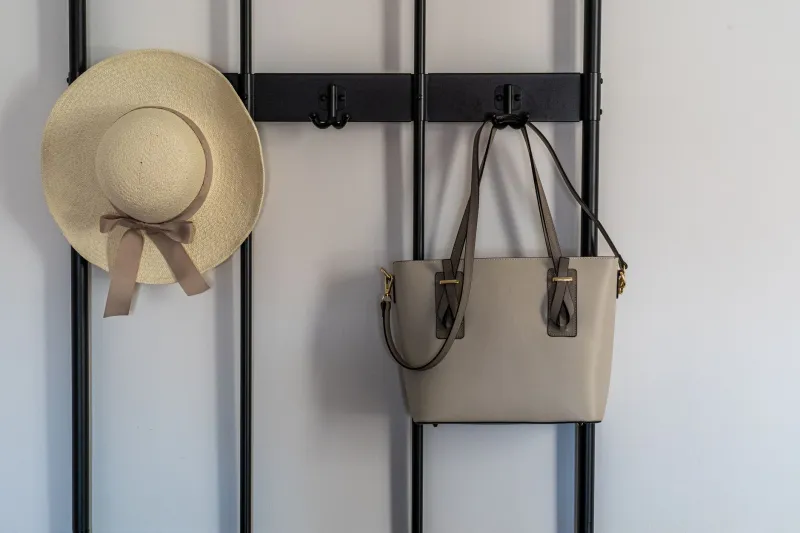
There's a bag in your closet right now that you haven't touched in eight months. Maybe longer. It's not broken, it's not ugly — it's just waiting. Waiting for the camping trip you keep almost booking. Waiting for the day your everyday bag breaks down mid-commute. Waiting for some vague, rainy-day emergency that your brain has decided requires its own dedicated accessory.
This is the just-in-case bag. And most of us have more than one.
On the surface, keeping backup bags feels practical — even responsible. But when you actually look at the math (the closet space, the mental inventory, the occasional guilt every time you spot it on the shelf), the cost of that safety net starts to add up in ways that have nothing to do with money.
Why We Hold Onto Bags We Never Use
The just-in-case mentality isn't really about bags. It's about anxiety.
Holding onto things for hypothetical scenarios is a well-documented psychological pattern — researchers call it precautionary hoarding, and it shows up constantly in the way Americans relate to their stuff. We don't keep a giant tote on the top shelf because we need it. We keep it because getting rid of it feels like tempting fate. The moment you donate it, you'll need it. That's the deal your brain has quietly made with itself.
The problem is that this logic, applied broadly, means nothing ever leaves. Every bag becomes load-bearing — not because it serves a real function, but because it represents a possibility. A version of your life where you suddenly need a structured briefcase, or a waterproof backpack, or a going-out clutch in a color you haven't worn since 2019.
That's not a wardrobe. That's a museum of who you might become.
The Real Cost Nobody Talks About
Let's set aside the obvious stuff — closet clutter, money tied up in items that aren't being used — and talk about the cost that's harder to quantify: decision fatigue.
Every object in your space is a micro-decision waiting to happen. Every time you walk into your closet and see the pile of backup bags, your brain does a tiny amount of work cataloging them, justifying them, filing them away again. It's not a big deal once. But it compounds. A closet full of contingency items is a closet full of open loops, and open loops are exhausting.
There's also the opportunity cost of space itself. In most American homes and apartments, closet real estate is genuinely limited. A shelf taken up by three bags you never use is a shelf that could hold the one bag you actually love — accessible, visible, ready to go. When your most-used bag is buried under a pile of just-in-cases, getting dressed becomes a chore instead of a choice.
The Audit Question Nobody Wants to Ask
Here's the thing about backup bags: most of them have never actually been used as backups. Think about it. When has your everyday bag actually failed you at a critical moment? And when it did — did you reach for the spare, or did you just... figure it out?
The honest answer for most people is the latter. We're more adaptable than we give ourselves credit for. A tote can become a gym bag. A crossbody can handle a day trip. The scenario that requires a specific backup bag is rarer than our anxiety suggests.
So here's the audit question worth sitting with: In the last twelve months, did this bag solve a problem — or did it just exist?
If it solved a problem, even once, it might be worth keeping. If it just existed, it's not a backup. It's a placeholder for worry.
A Framework for Figuring Out What Actually Stays
Not every contingency bag is junk. Some genuinely earn their spot. Here's a simple way to sort through them:
The Frequency Test. Did you use this bag — or a bag like it — at least three times in the past year? If yes, it's not really a backup; it's a secondary bag with a rotation. That's legitimate. If no, move on to the next question.
The Replace Test. If your everyday bag disappeared tomorrow, would this bag actually work as a replacement? Not in a pinch, not technically — but actually, in your real life, for your real schedule? If the answer is no (the camping backpack isn't going to cut it at your Tuesday meetings), then it's not a functional backup. It's a specific-use item waiting for a specific use that may never come.
The Duplicate Test. Do you own another bag that does the same job, just less ideally? If so, you probably don't need both. The better one stays; the lesser one goes.
The Scenario Test. Write down the actual scenario this bag is being saved for. Be specific. If you can't write a real sentence — if it's just a fuzzy feeling of someday — that's your answer.
What Intentional Carrying Actually Looks Like
The Beu Bag philosophy — carry less, mean more — isn't about deprivation. It's about intention. It's about making sure the things you own are actually working for you, not the other way around.
A just-in-case bag that never gets used isn't a safety net. It's a weight. And the irony is that the more backup options you maintain, the harder it becomes to commit fully to any single bag — to know it, break it in, make it yours.
There's something genuinely freeing about deciding that your one great bag is enough. That you trust yourself to handle the unexpected without a dedicated accessory for every hypothetical. That your closet reflects your actual life, not the seventeen lives you're quietly preparing for.
You don't need a bag for every scenario. You need a bag for the life you're actually living.
Letting Go Without the Guilt
If you've done the audit and found a few bags that don't make the cut, the next step is actually releasing them — which is its own challenge when the just-in-case mindset is strong.
A few things that help: Remind yourself that donating a bag doesn't delete it from the universe. Someone else gets to use it, and you get your shelf back. Set a rule that the bag has to go now, not after one more season of waiting. And if you're truly on the fence about something, give it a three-month deadline. If you haven't touched it by then, you have your answer.
Your closet should feel like a curated edit of who you are — not a hedge against who you might need to be. Clear out the contingency clutter, and you might be surprised how much lighter everything feels.