Handed Down vs. Hunted Down: What the Bags We Choose Say About Who We're Becoming

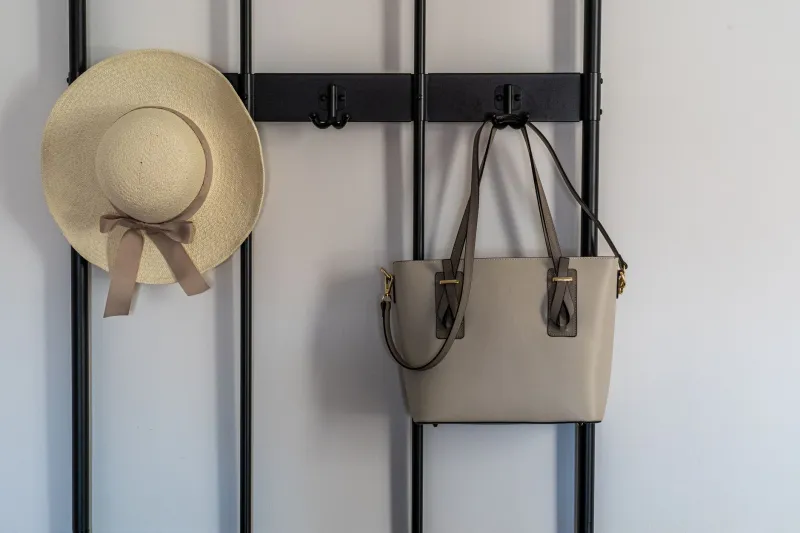
There's a tote sitting in your closet right now that you didn't pick. Maybe it was your mom's. Maybe a friend passed it along when she upgraded. Maybe it showed up at a family gathering wrapped in tissue paper, and you smiled and said thank you and meant it — mostly.
And then there's the bag you spent three weeks researching. The one you added to your cart, removed, added again, and finally bought on a Tuesday night when the stars aligned and the sale was real. You know every detail of that one. You chose it.
Both bags might be beautiful. Both might be functional. But they don't feel the same on your shoulder, and that's not an accident.
The Bag That Arrived Without an Application
Inherited bags — whether passed down through generations or gifted by someone who meant well — come with a kind of built-in story that isn't yours. That's both the magic and the complication.
On one hand, there's something genuinely special about carrying a piece with history. A vintage structured tote from your aunt who had impeccable taste carries a weight that no new purchase can replicate. You're not just wearing an accessory; you're wearing a memory, a lineage, a little bit of someone else's life chapter.
But here's the honest part: a bag you didn't choose is a bag you never fully interrogated. You didn't ask yourself whether it fits your actual wardrobe. You didn't hold it against your everyday outfits or consider whether the strap length works for your commute. It arrived, and you accepted it, and somewhere in that process, the question of does this actually work for me got skipped entirely.
That's not ingratitude. That's just reality. Passive acquisition and active selection are two fundamentally different processes, and your closet feels the difference even when you don't consciously name it.
The Psychology of the Hunt
When you choose a bag — really choose it, with intention and research and a clear-eyed sense of what your life actually looks like — something shifts. Psychologists call it the "endowment effect," the phenomenon where we assign more value to things we've actively acquired through effort. But there's more going on than just perceived value.
Selecting a bag for yourself requires a kind of self-knowledge that acceptance doesn't. You have to know what you carry day to day. You have to understand your own aesthetic well enough to recognize when something fits it. You have to weigh practicality against beauty and decide what ratio works for your life right now, not your life five years ago or your mother's life thirty years ago.
That process — even when it's just an hour of browsing and comparing — is actually a form of self-definition. You're not just picking a bag. You're articulating something about who you are and how you move through the world.
And that articulation? It shows. Bags you chose tend to integrate into your wardrobe more seamlessly because they were selected for that wardrobe. They don't sit on a shelf waiting for the right occasion that never quite comes. They get used, worn, broken in, loved.
Why Inherited Bags Sometimes Linger in Limbo
If you've ever felt faint guilt about a gifted bag you never actually use, you're in good company. The emotional weight of an inherited piece can actually work against you in practical terms.
You don't want to sell it because it belonged to someone you love. You don't want to donate it because that feels disloyal. But you also don't reach for it because it's not quite right — the color is off, the size doesn't fit your needs, the style belongs to a different decade or a different version of you that you've since outgrown.
So it sits. And every time you see it, you feel a complicated little knot of love and guilt and mild frustration, which is a lot of emotional labor for an object.
The truth is, a bag's sentimental value and its practical value are two separate things, and pretending they're the same doesn't serve you or the bag. You can honor where something came from without forcing it into daily rotation. You can love the story and still acknowledge that the bag isn't yours in the way that matters for your actual, present-tense life.
Making Peace With Both
None of this means inherited bags are lesser or that every purchase you make is automatically more meaningful. Context matters enormously.
Some handed-down bags genuinely do become yours — not because you felt obligated, but because you looked at them one day and realized they fit perfectly. The leather patina matches your aesthetic. The silhouette works with everything you own. You've started reaching for it instinctively, and somewhere along the way, it stopped being someone else's bag and became yours.
That shift is real, and it's worth paying attention to. It usually happens when you've done the quiet work of deciding — actively, consciously — that this piece belongs in your life. Which means even with a gifted bag, the moment it truly becomes yours is the moment you choose it.
On the flip side, not every purchase is a triumph of self-knowledge. Impulse buys, trend-chasing, and algorithm-driven clicks can produce bags that feel just as rootless as an unwanted hand-me-down. The intentionality matters more than the transaction.
Carry What You Actually Chose
At the end of the day, Beu Bag's whole philosophy is built around the idea that what you carry should mean something — not in a precious, overthought way, but in a this works for my actual life way. Carry less. Mean more.
That applies to how bags enter your life, too. Whether you're inheriting a piece or shopping for one, the goal is the same: get to a place where you've genuinely decided this belongs with you. Not because it was given, not because it was on sale, but because you looked at it clearly and said yes.
The bags that shape your style are often the ones you hunted down. But the ones that shape your soul? Those are the ones you finally, fully claimed — regardless of how they arrived.