Why Your Closet Is a Bag Cemetery (And You're the One Who Built It)
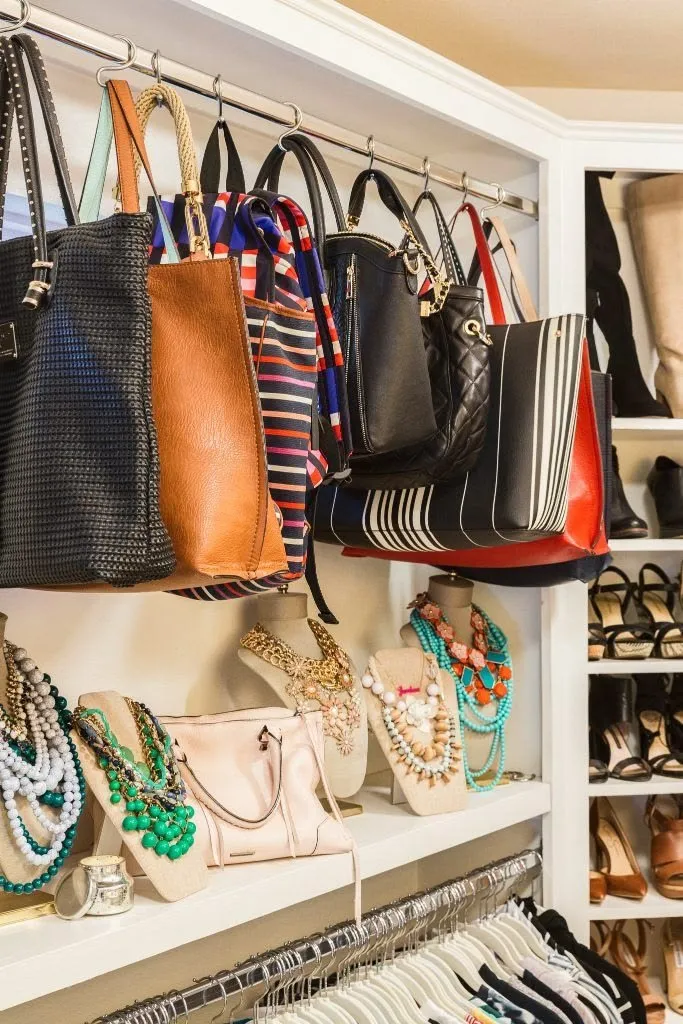
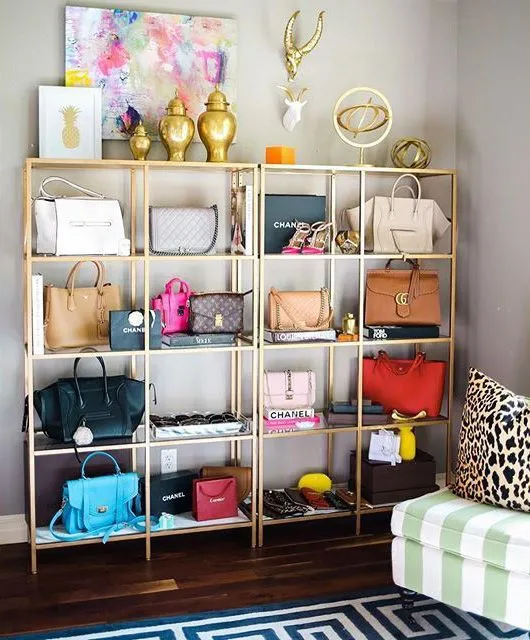
Photo: organized minimalist closet shelf with handbags, via i.pinimg.com
There's a corner of your closet you probably don't talk about much. Maybe it's a shelf. Maybe it's a bin. Maybe it's just a pile that's slowly migrating toward the floor. It holds bags you bought with real excitement, bags you received as gifts, bags that were almost perfect, bags you swear you'll use eventually.
You haven't touched most of them in over a year.
This isn't a judgment — it's practically universal. The average American woman owns somewhere between ten and twenty bags, and research on consumer behavior consistently shows that most people cycle through only a small fraction of what they own. The rest just... accumulates. Quietly. Guiltily.
So why do we hold on? And more importantly, how do we stop?
The Sunk Cost Trap Is Real (And It's Costing You More Than Closet Space)
The sunk cost fallacy is one of the most well-documented quirks of human psychology. In plain terms: we attach future value to money we've already spent, even when that money is gone regardless of what we do next.
With bags, it sounds like this: I paid $180 for that structured tote. I can't get rid of it. But here's the thing — that $180 is already spent. Keeping the bag in your closet doesn't recover it. What keeping the bag does do is take up physical space, mental bandwidth, and the subtle daily reminder that you made a purchase you regret.
Letting go of that tote doesn't mean you wasted $180. It means you're choosing not to let a past decision keep dictating your present.
This is the shift that changes everything: the question isn't what did this cost me? It's what is keeping this costing me now?
Emotional Attachment Isn't the Enemy — Unconscious Attachment Is
Some bags carry real weight. The clutch from your best friend's wedding. The crossbody you bought on your first solo trip abroad. The tote your mom passed down to you. These aren't just objects — they're anchors to specific chapters of your life, and there's nothing wrong with keeping them.
The problem is when emotional attachment becomes a blanket defense for everything. When the justification shifts from this bag means something specific to me to I just can't let it go, you're no longer making a conscious choice. You're letting inertia make the choice for you.
Ask yourself honestly: Do I keep this because it genuinely connects me to something meaningful? Or do I keep it because getting rid of it feels like admitting something? Sometimes the admission is just that you bought something that didn't work out. That's not a failure. That's just being human.
The 'Someday' Bag Is a Lie You Tell Yourself
Every closet has at least one. The evening bag for the gala you never attend. The oversized travel tote for the international trip you keep planning. The trendy mini bag you bought because you thought you'd eventually figure out how to carry less.
The someday bag is a form of wishful identity — you're not keeping the bag, you're keeping a version of yourself that might exist in the future. And while optimism is a lovely quality, it's a terrible organizational strategy.
Here's a simple test: if the occasion this bag is waiting for hasn't materialized in the last twelve months, it's not coming. Or if it does come, you'll have time to find something that actually fits who you are then, not who you imagined you'd be now.
A Framework for Deciding What Actually Deserves Space
Instead of asking should I keep this? — which almost always defaults to yes — try asking a different set of questions:
Does this bag fit my actual life, not my aspirational one? Think about your real weekly routine. Your commute, your errands, your social calendar. Does this bag show up in any of those scenarios organically, or only in a fantasy version of Tuesday?
Would I buy this today? Not at the same price, not on sale — just, would you choose it right now with fresh eyes? If the answer is no, that's telling.
Does owning this make me feel good, or just feel obligated? There's a difference between a bag you love and a bag you feel like you should love because of what it cost or who gave it to you. One belongs in your collection. The other belongs somewhere else.
Can I name one specific upcoming use for it? Not vague. Specific. If you can't, you probably won't.
Letting Go Isn't Loss — It's Editing
Here's the reframe that makes all of this easier: a smaller, better-curated bag collection isn't a consolation prize. It's the actual goal.
When you carry less, every bag you do own gets used more. It earns its place. You stop losing track of things, stop feeling overwhelmed every time you need to grab something on your way out the door, and stop carrying a low-level guilt about all the things you own but don't use.
Donating, consigning, or gifting a bag you never reach for isn't giving something up. It's reclaiming the clarity you lost when you bought it in the first place.
The brands and the algorithms want you to believe that more is always better — more options, more variety, more newness. But a closet full of bags you don't use isn't abundance. It's noise.
Where to Start (Without Overwhelming Yourself)
You don't have to overhaul your entire closet in an afternoon. Start with one shelf, one bin, one pile. Pull everything out. Hold each bag. Ask the questions above. Make three piles: keep, let go, and genuinely unsure.
For the unsure pile, give yourself a deadline. Box them up, write a date on the box three months from now, and see if you've gone looking for any of them. If you haven't, you have your answer.
The goal isn't minimalism for its own sake. The goal is a collection that's actually yours — bags that work for your real life, that you reach for with intention, that reflect who you are right now. Not who you were when you bought them. Not who you hope to be someday.
Just you, today, carrying exactly what you need.
That's the whole idea.