Stop Thinking in Price Tags: The Smarter Way to Calculate What a Bag Actually Costs You
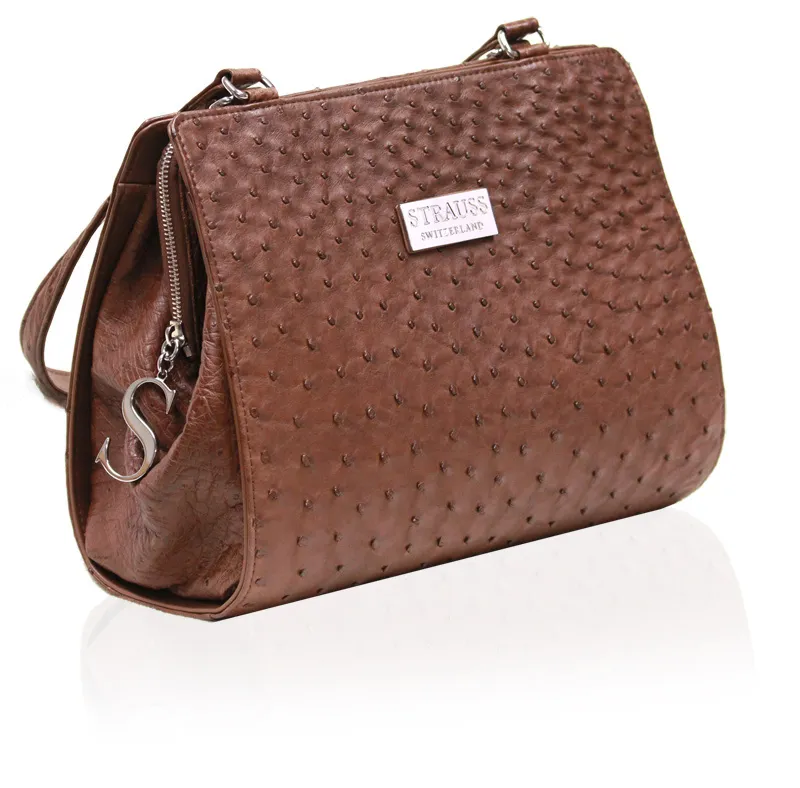
Photo: Claudio Ammon, CC BY-SA 3.0, via Wikimedia Commons
We've all done it. You spot a bag that costs more than your rent and immediately close the tab, telling yourself that's just not realistic. Then you buy something cheaper, feel pretty good about the decision for about three weeks, and then slowly watch it fall apart over the next six months. Rinse, repeat.
The problem isn't that you spent too much or too little. It's that you're measuring cost the wrong way. Sticker price is almost meaningless when it comes to bags. The number that actually matters is cost per wear — and once you start thinking in those terms, a lot of your assumptions about what's "affordable" get flipped on their head.
The Formula Is Simple. The Implications Aren't.
Cost per wear is about as straightforward as it gets:
Cost Per Wear = Total Purchase Price ÷ Number of Times Used
That's it. A $60 bag you carry 10 times costs you $6 per use. A $400 bag you carry 400 times costs you $1 per use. Suddenly, those numbers don't look the same anymore.
But here's where it gets interesting: cost per wear isn't static. Every time you reach for a bag, the cost goes down. A bag you use daily for three years isn't just a good investment in theory — the math proves it.
Real Numbers, Real Bags
Let's run through a few realistic scenarios to make this concrete.
Scenario A: The Budget Buy You pick up a trendy crossbody for $75 at a fast-fashion retailer. It's cute, it's current, it works for the season. But the strap starts to fray after about eight months, the lining peels, and by month ten you've stopped using it because it looks a little rough. Total uses: approximately 80. Cost per wear: $0.94.
Not terrible — until you factor in that you'll need to replace it. And the one after that. Over five years, you might cycle through four or five of these bags, spending $300–$375 total on something that never quite elevated your look.
Scenario B: The Investment Piece You spend $380 on a structured leather tote from a brand known for quality construction. It's not flashy, but the leather is genuine, the hardware is solid, and the silhouette is classic enough to work across seasons. You use it almost daily — commuting, weekend errands, casual dinners. Over four years, that's roughly 800 uses. Cost per wear: $0.48.
Half the cost per use, and the bag still looks good. In fact, it probably looks better than it did on day one.
Scenario C: The True Luxury Tier A designer bag at $1,200 feels like a different universe entirely. But if you carry it 1,500 times over the course of five to seven years — which is completely realistic for a well-made, versatile piece — you're looking at a cost per wear of $0.80. Still less than the fast-fashion option. And depending on the brand, that bag may hold or even appreciate in resale value, which changes the math even further in your favor.
Factoring in the Hidden Costs
Cost per wear is a great starting point, but it doesn't capture everything. To get the full picture, you need to think about total cost of ownership — which includes a few things people rarely consider.
Repairs and maintenance. Quality bags often need occasional care — conditioning leather, replacing a zipper pull, having straps reinforced. These costs are real but typically modest, and they extend the life of the bag significantly. Cheap bags, on the other hand, usually aren't worth repairing. When they break, they're done.
Opportunity cost of replacement. Every time you replace a bag, you're spending money, time, and mental energy. Shopping isn't free, even when the product is cheap. Factoring in the friction of constantly cycling through lower-quality pieces adds up in ways that don't show up on a receipt.
Resale value. This one is significant and often ignored. Certain bags — from brands with strong secondary market demand — retain a meaningful percentage of their original value. Some appreciate. If you buy a $900 bag and sell it for $500 three years later, your effective out-of-pocket cost was $400. Over 600 uses, that's less than $0.67 per wear. Suddenly, the math looks very different from what the sticker price implied.
How to Calculate Your Own Breakeven Point
If you're weighing a splurge purchase against a budget alternative, here's a simple way to find your breakeven:
- Subtract the price of the cheaper option from the price of the investment piece. That's your premium.
- Estimate how many times you'd use the cheaper bag before replacing it.
- Multiply that by the number of replacement cycles you'd go through over the same time period as the investment piece.
- Compare total spending.
For example: a $350 bag versus a $70 bag you'd replace every year over five years. The budget route costs $350 total — the exact same dollar amount. Except the investment bag is still going strong at year five, and the budget route gave you five mediocre bags instead of one great one.
What This Means for How You Shop
This framework doesn't mean every bag purchase should be expensive. It means every bag purchase should be intentional. A $40 beach tote that you use every summer for seven years is an excellent value. A $250 trendy bag you carry four times before the trend dies is a terrible one.
The questions to ask before buying:
- How often will I realistically reach for this?
- How long will this hold up to that kind of use?
- Does this work across enough contexts to justify the price?
- What's the resale potential if my needs change?
When you run those answers through a cost-per-wear lens, the right choice usually becomes pretty clear.
Spend Smarter, Not Just Less
The whole point of thinking this way isn't to give yourself permission to overspend. It's to stop making decisions based on a number that doesn't tell the whole story. Price is just the beginning. What you actually pay — in money, time, and the quiet frustration of owning things that don't work — is a much bigger number than most of us realize.
Carry less. Choose better. The math will back you up.