Pole Grip, Turnstile, Repeat: What Your Daily Commute Is Doing to Your Bag
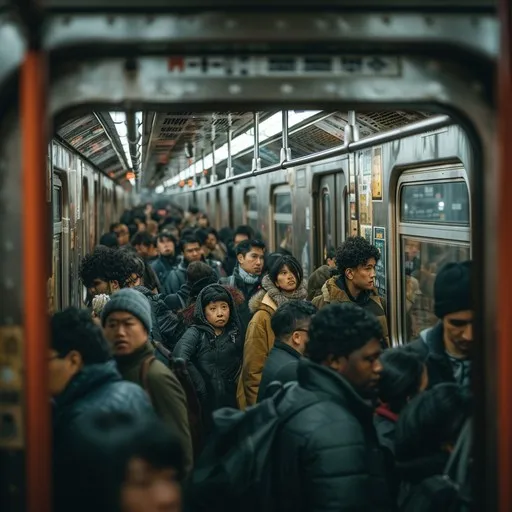
Photo: commuter holding bag on crowded subway train city morning, via images.stockcake.com
There's a moment every regular rider knows. You're wedged into a rush-hour train, one hand on a pole, your bag somewhere between your hip and a stranger's backpack. By the time you reach your stop, the leather has picked up a new scratch, the zipper has been bumped open an inch, and you've done a subtle security pat-down three times without even noticing.
Multiply that by 250 workdays and you start to understand something the fashion industry rarely mentions: for most Americans, the daily commute is the single harshest environment a bag will ever face. Not the airport. Not a rainy wedding. The Tuesday morning L train.
Your Commute Is a Stress Test You Didn't Sign Up For
Think about what a bag endures between 8 and 9 a.m. in a major city. It gets pressed against bodies in a crowded subway car. It swings from your shoulder as you jog down a flight of stairs. It brushes metal poles, escalator rails, and turnstile arms that have been touched by ten thousand hands since sunrise.
In New York, that means the subway. In Chicago, the El adds its own signature: rust-colored grime on the platforms and gusts that turn your bag into a windsock on the platform. In LA, where most people ride in someone else's car, the threat is different — your bag slides off the passenger seat, onto a floor that has seen things, every single ride.
None of this shows up on a product page. But it should be the first question you ask: not "does this look good?" but "does this survive my commute?"
Materials That Can Take a Hit
If you ride transit daily, treat delicate leather like a weekend-only privilege. For the everyday haul, you want materials with a proven track record under pressure.
Coated canvas and tightly woven nylon shrug off scuffs and wipe clean after a mystery brush with the pole. This is why messengers and work totes in these fabrics have quietly become the uniform of city professionals — they look presentable on day 500, not just day one.
Full-grain leather can work, but only if you accept that it will patina. The bag will look different in six months. If that thought bothers you, it's the wrong material for your route.
Pebbled or textured finishes hide scratches far better than smooth leather. A smooth calfskin tote shows every mark like a confession. Pebbled leather absorbs them into the texture.
Skip suede, satin, and anything unlined. One rainy platform wait in Chicago or one dropped coffee on the Red Line and it's over.
Zippers: The Most Underrated Security Feature
Pickpocketing on transit is rarely a movie-style heist. It's a hand slipping into an open top while you're staring at your phone. Which means the design details that matter most are the boring ones.
Zippers that close toward your body, not away from it. Bag openings that sit against your back or side rather than gaping at the ceiling. Interior zip pockets placed high, where you can feel them through the fabric. A top closure of any kind beats an open tote every time — as lovely as open totes are, on a crowded train they're a suggestion, not a container.
If you carry a tote out of necessity, use a zippered pouch inside for the things you'd actually miss: wallet, keys, transit card. The tote can be open. Your valuables shouldn't be.
The Real Price of "Cute but Impractical"
Here's the math nobody does at checkout. A $90 bag that deteriorates in one commuting year costs more per wear than a $300 bag that lasts four. The cute-but-flimsy option feels like a bargain and functions like a rental.
But the cost isn't only financial. It's the low-grade stress of carrying something you're protecting instead of something protecting you. It's turning your body into a shield on the train, angling your bag forward, gripping it instead of your coffee. A commute should be the most mindless part of your day. A bag that makes you think about it is charging you a fee.
A Quick Field Guide Before Your Next Purchase
- The squeeze test: Can the bag hold its shape when gently pressed? Slouchy is fine; collapsible under crowding is not.
- The one-hand test: Can you open it, grab your transit card, and close it while holding a pole? If not, add a card sleeve to your routine or your bag.
- The strap question: Crossbody or short straps that keep the bag against your body beat long shoulder straps that swing with every step.
- The base check: A bag that sits flat on a dirty platform floor without tipping wins. A rounded bottom that flops over loses.
- The weather question: Look up. Does it have any defense against rain, or will you be the person clutching a leather bag inside a coat?
Carry Less, Arrive Sane
The commuter's bag isn't a fashion statement — or rather, it's a quieter one. It says you've built a system that works at 7:45 a.m. on a crowded platform, which is a far more impressive kind of style than the kind that only exists in good lighting.
Buy for the route you actually take. Let the delicate things wait for the weekend. Your mornings — and your wallet — will both run smoother.